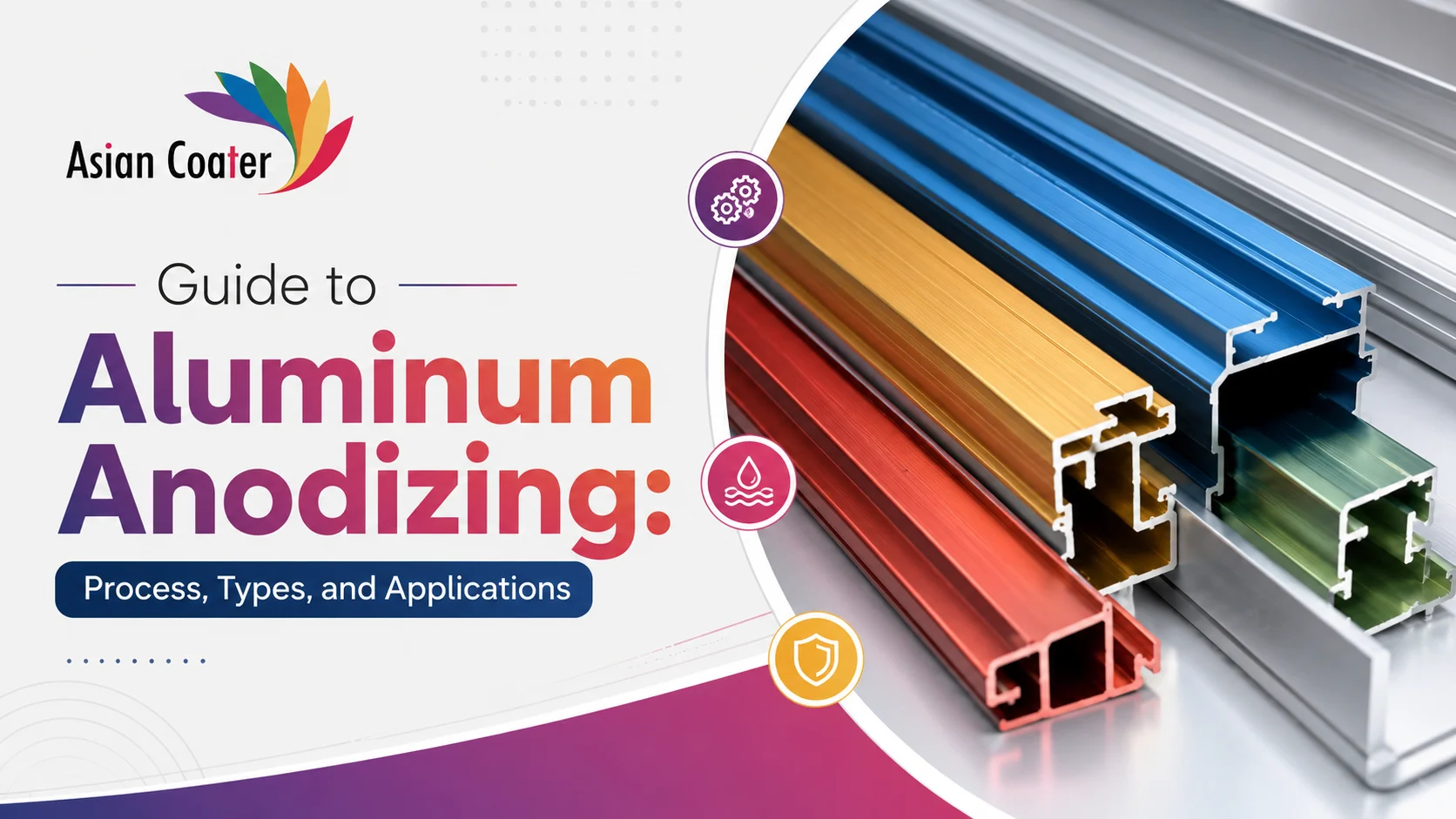
Aluminum is one of the most widely used metals across industries due to its lightweight nature, corrosion resistance, and excellent durability. However, to further enhance its performance and appearance, manufacturers often use the anodizing process. This surface treatment technique creates a protective oxide layer on aluminum, making it stronger, more resistant to wear, and aesthetically appealing.
Whether used in architecture, automotive components, electronics, or industrial equipment, anodized aluminum continues to be a preferred choice because of its enhanced properties. Asian Coater specialize in advanced anodizing solutions and offer high-quality surface finishing services that meet modern industrial requirements.
What is Aluminum Anodizing?
Aluminum anodizing is an electrochemical treatment that increases the thickness of the natural oxide layer on the surface of aluminum. Unlike paint or coatings that sit on the metal’s surface, the anodized layer becomes an integral part of the material itself.
The anodizing process improves corrosion resistance, surface hardness, and decorative appearance while maintaining the lightweight characteristics of aluminum. This makes anodized aluminum suitable for both functional and decorative applications.
How Does the Anodizing Process Work?
The anodizing process involves several carefully controlled steps to achieve a durable and uniform finish.
1. Surface Cleaning
The aluminum surface is thoroughly cleaned to remove dirt, grease, oils, and contaminants. Proper cleaning ensures a consistent finish throughout the process.
2. Etching
The material is treated with an alkaline solution to remove minor imperfections and create a smooth surface.
3. Anodizing Bath
The aluminum component is immersed in an electrolyte solution, typically sulfuric acid. An electric current passes through the solution, causing oxygen ions to bond with the aluminum surface and form a protective oxide layer.
4. Coloring (Optional)
Many applications require decorative finishes. During the anodising process, colors can be introduced into the porous oxide layer before sealing.
5. Sealing
The final stage closes the pores in the anodized coating, enhancing durability and corrosion resistance.
This complete anodizing process produces a strong, attractive, and long-lasting surface finish.
Types of Aluminum Anodizing
Different industries require varying levels of protection and performance. As a result, several types of anodizing are commonly used.
Type I: Chromic Acid Anodizing
This method produces a thin protective layer and is often used in aerospace applications where weight considerations are critical.
Type II: Sulfuric Acid Anodizing
Type II is the most commonly used anodizing process. It provides excellent corrosion resistance and allows for a wide range of color finishes.
Type III: Hard Anodizing
Also known as hard coat anodizing, this process creates a thicker and harder oxide layer. It is ideal for industrial components exposed to heavy wear and demanding operating conditions.
At Asian Coater, advanced anodizing technologies help offer reliable finishing solutions for various industrial applications.
Benefits of Anodized Aluminum
The popularity of anodized aluminum continues to grow because of its numerous advantages.
- Excellent Corrosion Resistance: The protective oxide layer shields aluminum from moisture, chemicals, and environmental factors, significantly extending product life.
- Enhanced Durability: The hardened surface created through the anodising process resists scratches, abrasion, and daily wear.
- Attractive Appearance: Anodized finishes are available in various colors and textures, making them suitable for architectural and decorative applications.
- UV Stability: Unlike painted surfaces, anodized aluminum does not peel or fade easily when exposed to sunlight.
- Environmentally Friendly: The anodizing process produces a non-toxic finish that is recyclable and environmentally sustainable.
- Low Maintenance: Anodized surfaces require minimal cleaning and maintenance while maintaining their appearance for years.
Applications of Anodized Aluminum
The versatility of anodized aluminum makes it valuable across multiple industries.
1. Architecture and Construction
Anodized aluminum is widely used in:
- Curtain walls
- Window frames
- Doors
- Railings
- Building facades
Its corrosion resistance and modern appearance make it ideal for outdoor structures.
2. Automotive Industry
Automotive manufacturers use anodized aluminum for trim components, decorative parts, and performance-related applications where durability is essential.
3. Electronics
Many electronic devices feature anodized aluminum housings because of their premium appearance and resistance to scratches and corrosion.
4. Aerospace
Aircraft manufacturers rely on the anodizing process to improve the performance and lifespan of critical aluminum components.
5. Medical Equipment
Medical instruments and equipment often use anodized surfaces due to their durability, cleanliness, and resistance to corrosion.
6. Industrial Machinery
Hard-anodized components are frequently used in machinery, conveyor systems, and production equipment that experience continuous wear.
Why Choose Professional Anodizing Services?
The quality of the final finish depends heavily on process control, equipment, and technical expertise. Professional service providers ensure consistent coating thickness, superior surface quality, and compliance with industry standards.
Asian Coater utilizes modern technologies and strict quality control measures to offer dependable anodizing solutions for a wide range of industries. Our expertise helps customers achieve high-performance finishes that enhance both functionality and appearance.
Conclusion
The anodizing process is one of the most effective methods for improving the performance, durability, and aesthetics of aluminum products. Whether referred to as the anodising process or anodizing, this treatment creates a strong protective layer that significantly enhances the properties of aluminum.
From architectural structures and automotive components to electronics and industrial machinery, anodized aluminum continues to play a crucial role in modern manufacturing. Asian Coater, businesses can offer their customers products with superior corrosion resistance, attractive finishes, and long-lasting performance. As industries continue to demand high-quality materials, anodized aluminum and anodized aluminum finishing solutions will remain an essential part of advanced manufacturing.