Powder coating has become one of the most preferred surface finishing technologies across various industries due to its exceptional durability, environmental benefits, and aesthetic appeal. From manufacturing plants and commercial buildings to architectural structures and heavy machinery, powder coating provides a high-performance finish that outperforms many traditional liquid coatings.
At Asian Coater, we offer advanced powder coating solutions designed to meet the demanding requirements of industrial, commercial, and architectural applications. Our expertise in surface finishing enables us to deliver coatings that combine superior protection with outstanding visual appeal.
Powder Coating Technology
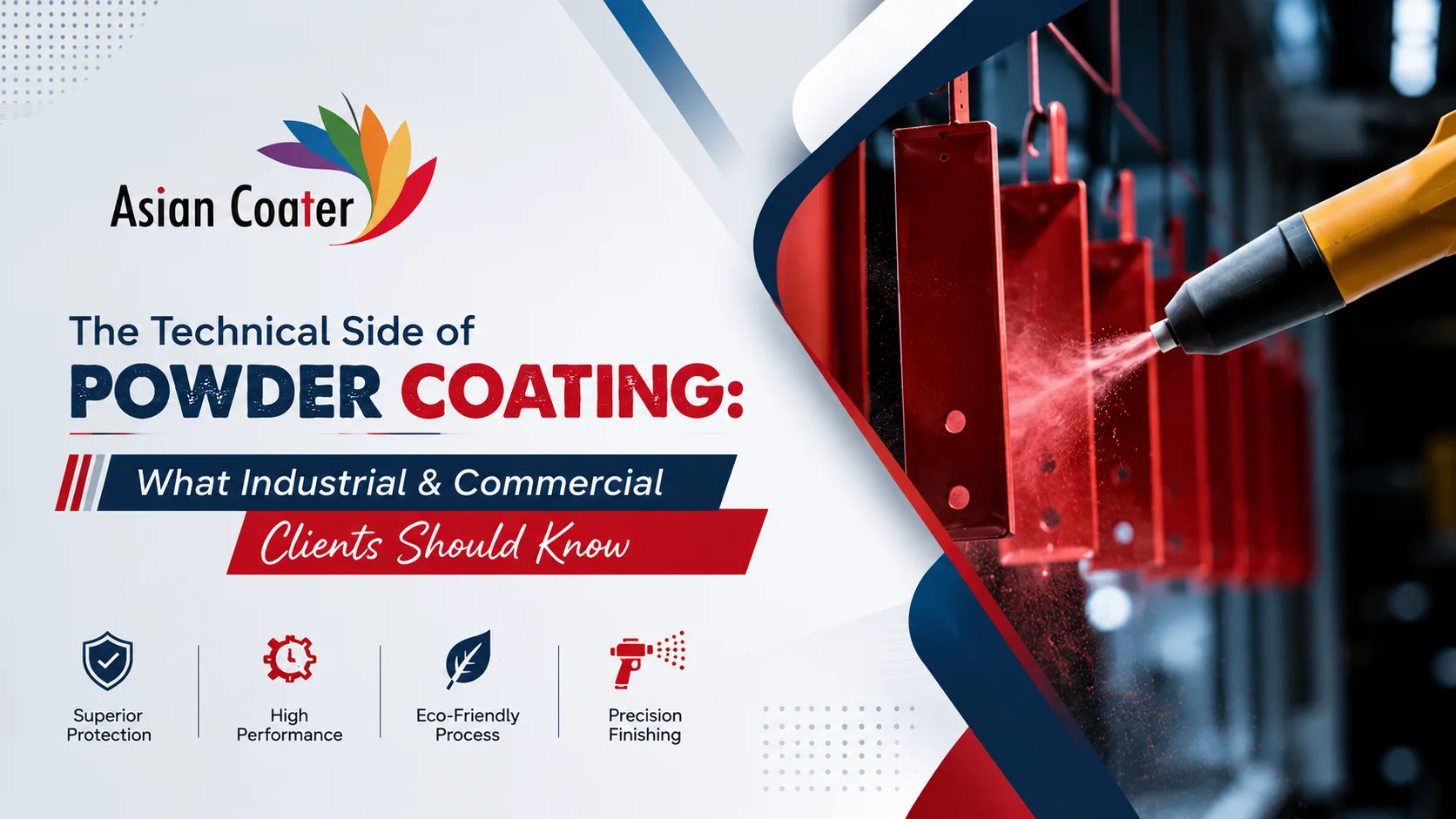
Powder Coating is a dry finishing process in which finely ground particles of resin and pigments are electrostatically applied to a prepared surface and then cured under heat. During the curing process, the powder melts, flows, and chemically bonds to create a uniform, durable, and protective coating layer.
The Science Behind Industrial Powder Coating
Industrial powder coating involves applying specialized coating systems engineered to withstand harsh operating environments. These coatings are formulated to resist corrosion, abrasion, chemicals, moisture, and extreme temperatures.
The industrial powder coating process generally consists of several critical stages:
Surface Preparation
Surface preparation is one of the most important factors affecting coating performance. Components undergo cleaning, degreasing, chemical treatment, or abrasive blasting to remove contaminants and create an ideal surface profile.
Powder Application
The coating powder is applied using electrostatic spray equipment. The charged powder particles adhere uniformly to the grounded substrate, ensuring consistent coating thickness and coverage.
Curing Process
After application, coated components are transferred to curing ovens where temperatures typically range between 160°C and 220°C. During curing, the powder melts and cross-links to form a hard, continuous protective layer.
Inspection and Quality Control
The finished coating undergoes extensive quality checks for thickness, adhesion, gloss level, impact resistance, and corrosion protection to ensure compliance with industrial standards.
Types of Industrial Powder Coatings
Various industrial powder coatings are available depending on performance requirements and environmental conditions.
Epoxy Powder Coatings
Epoxy coatings provide excellent chemical resistance and superior adhesion properties. They are widely used for indoor industrial applications and protective equipment.
Polyester Powder Coatings
Polyester coatings offer exceptional weather resistance, UV stability, and color retention, making them suitable for exterior applications.
Epoxy-Polyester Hybrid Coatings
These coatings combine the benefits of both epoxy and polyester systems and are commonly used for indoor commercial products.
Polyurethane Powder Coatings
Polyurethane coatings deliver excellent flexibility, chemical resistance, and superior surface finish quality.
Commercial Powder Coating Applications
Commercial powder coating plays an essential role in protecting and enhancing products used in commercial environments. Businesses increasingly prefer powder-coated surfaces due to their durability and low maintenance requirements.
Common commercial powder coating applications include:
- Office furniture
- Retail fixtures
- Storage systems
- Lighting equipment
- Commercial kitchen equipment
- Transportation components
- Electrical enclosures
- HVAC equipment
- Display structures
Commercial powder coating provides an attractive finish while maintaining excellent resistance to wear and environmental exposure.
Architectural Powder Coating for Modern Construction
The construction industry extensively relies on architectural powder coating to protect and beautify building components. Architectural applications require coatings that can withstand prolonged exposure to sunlight, rain, humidity, pollution, and temperature fluctuations.
Architectural powder coating is widely used for:
- Aluminum windows
- Curtain wall systems
- Building facades
- Railings and fencing
- Structural components
- Decorative panels
- Doors and partitions
- Exterior cladding systems
Modern architectural powder coating systems provide excellent color retention, weather resistance, and long-term durability, making them an ideal solution for contemporary construction projects.
Protective Powder Coating and Corrosion Resistance
One of the primary reasons industries invest in protective powder coating is its superior corrosion protection capability. Industrial environments often expose equipment and structures to moisture, chemicals, abrasion, and harsh weather conditions.
Protective powder coating creates a dense barrier that helps prevent:
- Corrosion
- Oxidation
- Chemical attack
- Mechanical wear
- UV degradation
- Moisture penetration
- Surface abrasion
This enhanced protection significantly extends equipment lifespan while reducing maintenance and replacement costs.
Technical Factors Clients Should Consider
When selecting powder coating services, industrial and commercial clients should evaluate several important technical factors.
Coating Thickness
The thickness of the coating directly impacts durability, appearance, and corrosion resistance. Different applications require specific coating thickness standards.
Environmental Exposure
The operating environment determines which powder coating chemistry should be selected. Indoor and outdoor applications require different performance characteristics.
Surface Material
The substrate material influences adhesion properties and coating selection. Aluminum, steel, galvanized steel, and other metals require specialized treatment processes.
Performance Requirements
Factors such as impact resistance, chemical exposure, UV stability, and abrasion resistance should be carefully considered before selecting a coating system.
Industry Standards
Certain industries require compliance with international standards and certifications to ensure coating performance and reliability.
Advantages of Powder Coating Technology
Powder coating offers numerous technical and operational advantages over traditional finishing methods:
- Exceptional durability
- Superior corrosion resistance
- Excellent impact resistance
- Environmentally friendly processing
- Uniform coating thickness
- Outstanding aesthetic appearance
- Low maintenance requirements
- Enhanced weather resistance
- Reduced material waste
- Cost-effective long-term performance
These advantages make powder coating one of the most reliable surface finishing technologies available today.
Why Choose Asian Coater?
At Asian Coater, we offer comprehensive powder coating solutions for industrial, commercial, and architectural applications. Our experienced professionals utilize advanced coating technologies, modern curing systems, and stringent quality control procedures to deliver superior surface finishes.
Whether clients require industrial powder coating, commercial powder coating, architectural powder coating, or specialized protective powder coating, our team is committed to providing customized solutions that meet performance expectations and industry standards.
Conclusion
Understanding the technical aspects of powder coating allows industrial and commercial clients to maximize product durability, improve operational efficiency, and reduce long-term maintenance costs. With advancements in industrial powder coatings, businesses can achieve superior protection, attractive finishes, and environmentally sustainable performance.
As industries continue to demand high-performance surface treatments, powder coating remains one of the most effective and reliable finishing solutions available. Through innovation, expertise, and quality service, Asian Coater continues to support clients with advanced powder coating technologies designed for modern industrial applications.