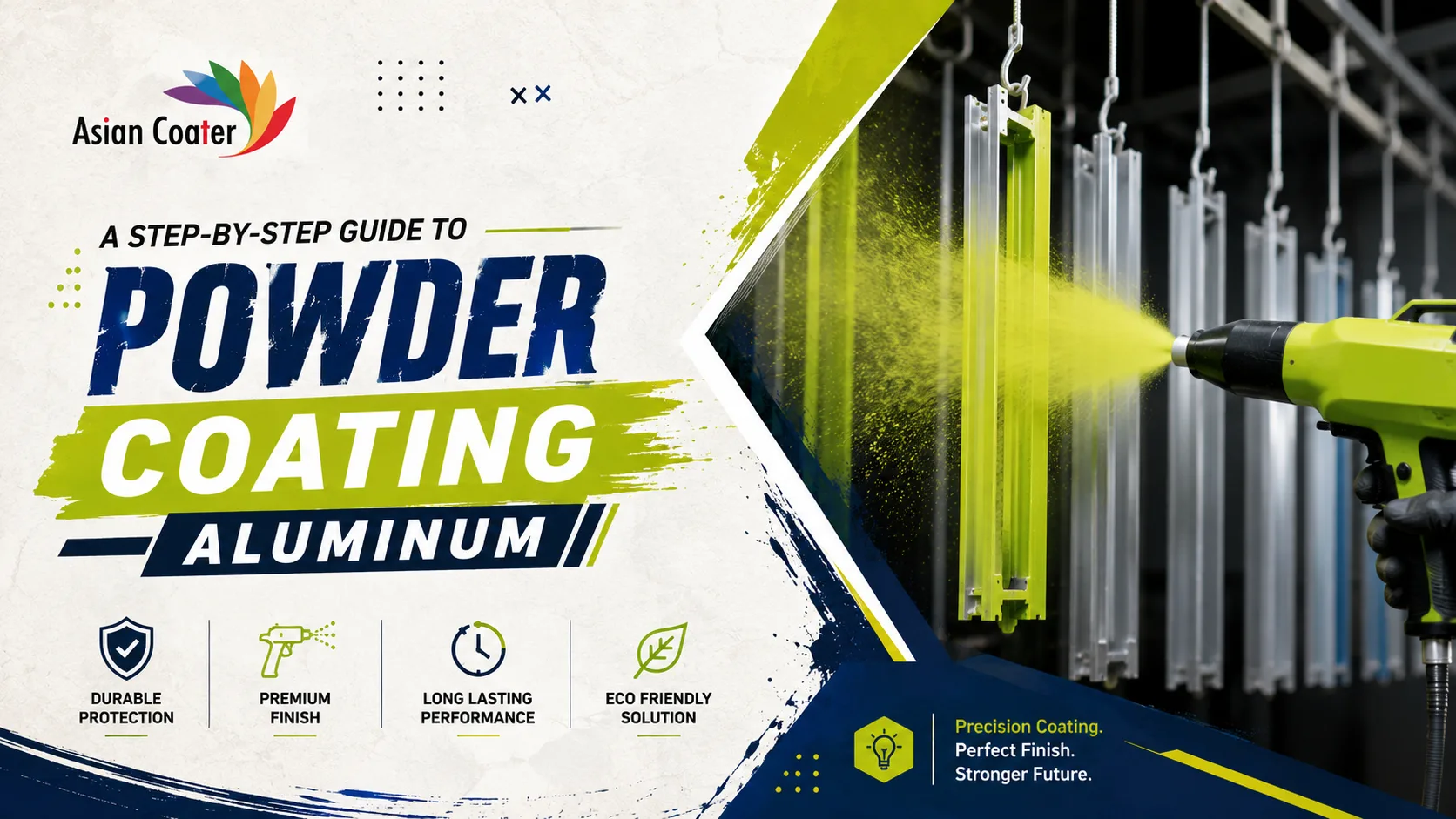
Aluminum is one of the most widely used materials in industries such as construction, automotive, architecture, furniture manufacturing, and industrial equipment. While aluminum naturally offers excellent corrosion resistance, adding a protective and decorative finish can significantly enhance its durability and appearance. One of the most effective finishing methods available today is powder coating aluminum.
At Asian Coater, we provide professional powder coating solutions that improve the performance, longevity, and visual appeal of aluminum products. Whether you are working on architectural panels, window frames, railings, automotive components, or industrial equipment, understanding the powder coating process can help you achieve superior results.
Can You Powder Coat Aluminum?
The process creates a durable, attractive, and weather-resistant finish that adheres exceptionally well to properly prepared aluminum surfaces. Because aluminum is lightweight, corrosion-resistant, and easy to fabricate, combining it with powder coating creates a highly durable solution suitable for both indoor and outdoor applications.
Many industries prefer powder coated aluminum because it provides excellent protection against moisture, UV exposure, scratches, chemicals, and environmental wear.
Also Read : The Best Outdoor Wood Finish: How to Protect Your Wood Like a Pro
What Is Powder Coating?
Powder coating is a dry finishing process where electrically charged powder particles are applied to a metal surface and then cured in an oven. During curing, the powder melts and forms a smooth, continuous protective coating.
Unlike traditional liquid paints, powder coating contains no solvents and produces a thicker, more uniform finish. This makes powder coating aluminum an environmentally friendly and highly durable finishing method.
Step 1: Surface Inspection
The first step in powder coating aluminium is inspecting the material.
Before coating begins, technicians examine the aluminum surface for:
- Dirt and dust
- Oil and grease
- Oxidation
- Surface scratches
- Manufacturing residues
- Welding imperfections
Any contamination left on the surface can negatively affect coating adhesion and finish quality.
Step 2: Cleaning and Degreasing
Proper cleaning is one of the most critical stages when preparing to powder coat aluminum. Aluminum surfaces often contain oils, lubricants, fingerprints, and processing residues from manufacturing and handling. These contaminants must be completely removed.
Cleaning methods may include:
- Chemical degreasing
- Alkaline cleaning
- Pressure washing
- Solvent cleaning
- Water rinsing
Thorough cleaning creates a contamination-free surface that allows the powder coating to bond effectively.
Step 3: Surface Pretreatment
After cleaning, the aluminum undergoes pretreatment to improve coating adhesion and corrosion resistance.
Common pretreatment methods include:
- Chromate Conversion Coating: Traditionally used to enhance corrosion protection and coating performance.
- Non-Chrome Pretreatment: Environmentally friendly alternatives that provide strong adhesion and durability.
- Phosphate Treatments: Used in certain industrial applications to prepare metal surfaces for coating.
This stage is extremely important because proper pretreatment directly impacts the lifespan of the finished powder coated aluminum product.
Step 4: Drying the Aluminum
Following pretreatment, the aluminum must be completely dried before coating. Any moisture trapped on the surface can interfere with powder adhesion and create coating defects during curing. Industrial drying ovens are commonly used to ensure consistent surface preparation.
Once dry, the aluminum is ready for powder application.
Step 5: Applying the Powder Coating
The next stage involves applying the powder material to the prepared aluminum surface.
Using electrostatic spray guns, technicians apply electrically charged powder particles onto grounded aluminum components. The electrostatic attraction ensures the powder adheres evenly across the surface.
Popular finishes for powder coating aluminium include:
- Matte finishes
- Gloss finishes
- Satin finishes
- Metallic coatings
- Textured coatings
- Architectural colors
- Custom decorative finishes
The versatility of powder coating allows manufacturers to achieve virtually any desired appearance.
Step 6: Curing Process
Once the powder has been applied, the coated aluminum is transferred to a curing oven.
During curing:
- The powder melts
- The particles flow together
- A uniform coating forms
- The finish chemically cross-links
- The surface hardens
The curing temperature and duration depend on the specific powder formulation being used. This step transforms loose powder particles into a strong, durable coating bonded permanently to the aluminum surface.
Step 7: Cooling and Inspection
After curing, the coated parts are allowed to cool naturally.
Technicians then conduct quality inspections to verify:
- Coating thickness
- Color consistency
- Surface smoothness
- Adhesion performance
- Impact resistance
- Overall appearance
Quality control ensures that every finished product meets industry standards and customer expectations.
Benefits of Powder Coating Aluminum
There are many reasons industries continue choosing powder coating aluminum over conventional paint systems.
- Superior Durability: Powder coatings resist scratches, impacts, abrasion, and daily wear more effectively than many liquid coatings.
- Corrosion Protection: The coating creates a protective barrier that helps shield aluminum from moisture and environmental exposure.
- Attractive Appearance: Powder coating provides a smooth, uniform finish available in a wide variety of colors and textures.
- UV Resistance: Many powder coatings retain their color and appearance even after prolonged outdoor exposure.
- Environmentally Friendly:Unlike traditional paint systems, powder coating contains little or no volatile organic compounds (VOCs).
- Cost Efficiency: The long lifespan and reduced maintenance requirements make powder coat aluminum finishes highly cost-effective over time.
Why Choose an Asian Coater?
At Asian Coater, we offer advanced powder coating services tailored to a wide range of industrial and commercial requirements. Our experienced team utilizes modern equipment, quality-controlled processes, and premium coating materials to ensure outstanding performance and finish quality. Whether you need powder coating aluminum, customized architectural finishes, or large-scale industrial coating projects, we provide reliable solutions designed for long-term durability and visual appeal.
The process of powder coating aluminium involves careful preparation, precision application, and controlled curing to create a durable and attractive finish. From cleaning and pretreatment to final inspection, every step contributes to the performance of the finished product.
If you have ever wondered, can you powder coat aluminum, the answer is a definite yes. With the right process and professional expertise, powder coat aluminum solutions can deliver excellent corrosion resistance, long-lasting beauty, and superior durability. At Asian Coater, we offer high-quality powder coating services that help businesses and property owners achieve exceptional results with every project.